Testing one’s blood sugar levels is an essential component of overall health care and is vital to those people suffering from diabetes or those whose blood glucose levels require monitoring. Blood sugar tests will help you figure out the effects of food on your blood sugar levels, exercise, medicines, and other things. Moreover, this will help you determine whether you have high or low blood sugar levels.
Luckily, testing blood sugar at home is an easy task if you have the right materials and know the proper way of doing so. This article will provide you with information about testing blood sugar levels at home, the time of doing so, how to interpret results, and precautions. .
What Is Blood Sugar Testing?
Glucose is one of the types of sugars which provide energy for the cells in the body. The glucose levels are regulated by means of hormones, primarily insulin.
If this process does not work properly, then glucose levels may be too high or too low. The high level of glucose in the blood indicates diabetes or uncontrolled glucose level, while the low level of glucose may cause sweating, shaking, dizziness and confusion.
The test of your blood sugar level at home will assist you in measuring the glucose level away from the clinic.
What Do You Need to Test Your Blood Sugar Level at Home?
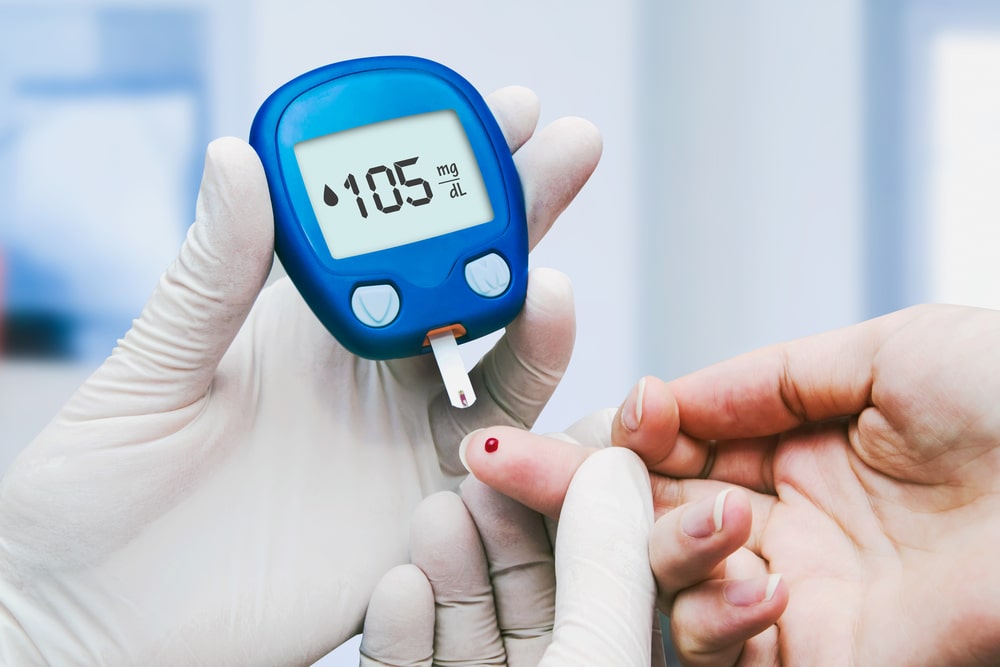
It is important for you to have all necessary devices before starting the procedure. The majority of people use a blood glucose meter to measure their blood sugar level.
Blood glucose meter: It is an electronic device to measure the glucose level in your blood.
Test strips: These are disposable strips that are suitable for your blood glucose meter.
Lancing device: A tool to take out a drop of blood.
Lancets: These are small needles to be used with the lancing device.
Soap and water: Used to clean your hands before measuring.
Tissues/cotton: Needed for handling a drop of blood after the measuring process.
Also, make sure to check the manual for the instructions for each new meter. Your test strips have to match your meter, and they have to be stored as stated by the manufacturer on the box.
How to Test Blood Sugar at Home Step by Step
Here is how you take a blood sugar test using the conventional finger prick glucose meter.
Step 1: Washing and Drying of Hands
It is important to wash hands using warm water and soap, and dry your hands prior to taking a test. This is because contamination of your hands with food particles, fruit juices, among others, might alter the test results.
Step 2: Preparing Your Glucose Monitor
Take out your glucose meter along with the test strips that work with it. Look at the expiry date on the test strip container and ensure that it is stored correctly.
Insert the test strip into the meter as per the instructions provided by the manufacturer. Normally, the meter lights up showing that it is ready for use.
Step 3: Preparing the Lancing Device
Insert a fresh, sterile lancet to the lancing device. If your lancing device has adjustable settings, make the adjustment now.
Some devices require shallow settings for most individuals, while others will require other settings depending on individual skin type. Always follow the manufacturer’s directions and do not use a used lancet.
Step 4: Puncture the Finger Tip
The side of the finger tip should be preferred over the center of the finger tip, which might be less painful. The lancing device should then be used to get a small amount of blood.
Avoid squeezing your finger too hard, since this could influence the result. In case it is difficult to get the blood, the finger can be massaged toward the finger tip.
Step 5: Apply the Blood to the Test Strip
Apply the drop of blood in the designated area of the test strip. Allow the test strip to absorb the blood as instructed.
Do not apply more blood than required or spread the blood on the test strip unless instructed to do so by your meter’s manufacturer.
Step 6: Read Your Test Result
Give the meter a chance to display your test result. Most meters will show their results in seconds.
The blood glucose concentration is normally measured in milligrams per deciliter (mg/dL). But there are meters that will give their results in millimoles per liter Keep record of the result as well as their time and date of when it was done, before or after the meal.
Step 7: Disposal of Used Equipment
Dispose of the used lancet as directed by its manufacturer and discard it in the proper disposal box. Also dispose of the used test strip as per its instruction.
The glucose meter, the lancing device, and the lancets must not be shared by anyone other than the person using it as this increases the risk of infection.
When Does One Have to Test Blood Sugar Level?
The best time to test blood sugar will depend on several different factors including health condition, medicines as well as the information given by the doctor.
Following are some common times when one needs to test blood sugar:
- Fasting: Before taking food in the morning when one fasts overnight.
- Before eating: Knowing what the glucose level is before eating.
- After eating: After an hour or two of having a meal.
- Before working out: Deciding whether to work out or not.
- Before bedtime: If suggested by your doctor.
- Anytime symptoms occur: Checking your blood sugar levels in case there is an excess or deficiency of sugar in your body.
People who use insulin or those medicines that lead to low blood sugar need more tests than other people; otherwise, there is no necessity of doing regular checks of blood sugar.
What Is a Normal Blood Sugar Level?
Objectives for blood glucose levels vary based on the patient’s age, pregnancy status, and how diabetes and associated diseases in the patient are being managed.
Objective for blood glucose in non-pregnant diabetic patients are as follows:
- Time of Measurement
- Objective for Blood Glucose
- Before Meals: 80-130 mg/dl
- 2 Hours After Food Consumption: <180 mg/dl
This is an objective for management of diabetes but not common objective.
Tips for Getting Accurate Blood Sugar Readings
There must be testing done in order to make informed decisions about the glucose levels within the body.
The following must be taken into account when conducting tests:
- Make sure that your hands are clean and dry when conducting your test.
- It is also important to make sure that the test strips you use are compatible with your glucose meter.
- It is important to keep track of the expiration date of your test strips.
- Make sure that your test strips are well stored.
- Do not conduct tests when your hands are wet or dirty.
When conducting the test, make sure that you use a new lancet in every test.
Make sure that your glucose meter is kept in proper hygiene.
Look out for information and abnormal values.
In the case where there is any difference between the values and the symptoms, clean your hands and do the test again using a new test strip.
In case of abnormal values, it is also important that you seek medical advice.
In case of any error message on the glucose meter, do not interpret the messages but refer to the user manual.
What Should You Do If Your Blood Sugar Is Too High or Too Low?
Therefore, it is important to be careful with the issue of abnormally high blood sugar levels.
Symptoms of low blood glucose levels include trembling, sweating, hunger, dizziness, and confusion. At the same time, the normal blood sugar level is lower than 70 mg/dL. If one can eat something, there are recommendations that could be useful in this situation. One should consume 15 grams of carbohydrates, which are quickly absorbed, and monitor the glucose level in 15 minutes if it is lower than 70 mg/dL.
In case one feels unconscious, has convulsions, or is unable to eat anything, one cannot feed the patient. One should call for help and administer glucagon in case one can do that.
Should one have high blood glucose levels, there is a possibility that one would suffer from increased thirst, frequent urination, fatigue, and blurred vision. Therefore, one needs to take into account the recommended treatment regimen and consult a doctor in case of high blood sugar levels.
If one experiences vomiting, stomach pains, rapid breathing, dehydration, and confusion, then one has to contact a physician because one can be suffering from diabetic ketoacidosis.
Can One Measure Glucose Level without Sticking a Finger?
There are some people who measure their glucose level using the help of a continuous glucose monitor, whereby they measure the glucose level both at day and night. Mostly, the CGM system is made up of sensors that are worn on the body which measure the glucose level in the interstitial fluid.
The CGM will tell whether the glucose level is going up or down and will trigger an alarm if there is too much or too little glucose in the body. The system cannot measure the glucose level in the blood since the glucose level measured is the interstitial glucose level.
Some CGMs need finger pricking at certain times.
Conclusion
MePeriodic measurement of glucose levels at home may be regarded as one of the methods of glucose measurement and the management of diabetes. The measurement of glucose levels with the help of a proper glucose meter, clean hands, suitable test strips for that glucose meter and the right method of testing will allow you to receive all necessary information in a few minutes.
The main things to consider when doing this are the proper intervals between tests, results recording, any signs of abnormalities detection and your personal regimen. Please remember that self-testing will assist you in your treatment but will not substitute professional tests and regular visits to a doctor.
In case you are not sure about the frequency of tests to conduct, their interpretation and what you have to do in case if the results are not within your target range, please consult a professional.
Leave a Reply