It can be difficult to know whether your body weight is appropriate for your height. This is where the Body Mass Index (BMI) can come in handy. BMI is a simple tool that allows you to determine if your body weight is within a healthy range for your height.
The following guide covers what is a BMI, how it is calculated, and what the BMI number means for you. Find out the BMI body mass index formula and learn about the different weight categories to understand how the BMI can help you keep track of your general health.
What Is a BMI?
BMI is an abbreviation for Body Mass Index. It is a number that is calculated based on a person’s weight and height. BMI is a commonly used screening tool by healthcare professionals to determine whether someone is underweight, has a healthy weight, is overweight or is obese.
The main purpose of the BMI is to give a quick overview of your body weight relative to your height. Rather than only considering your weight, the mass index BMI calculation takes into account both your weight and height to help determine if your weight is in a recommended range.
BMI is widely used in hospitals, fitness centers, healthcare facilities, and public health studies.
However, it’s important to note that BMI is not a direct measurement of body fat or health.
How Is BMI Calculated?
Calculating BMI is relatively simple. You only need to know two things: your weight and height.
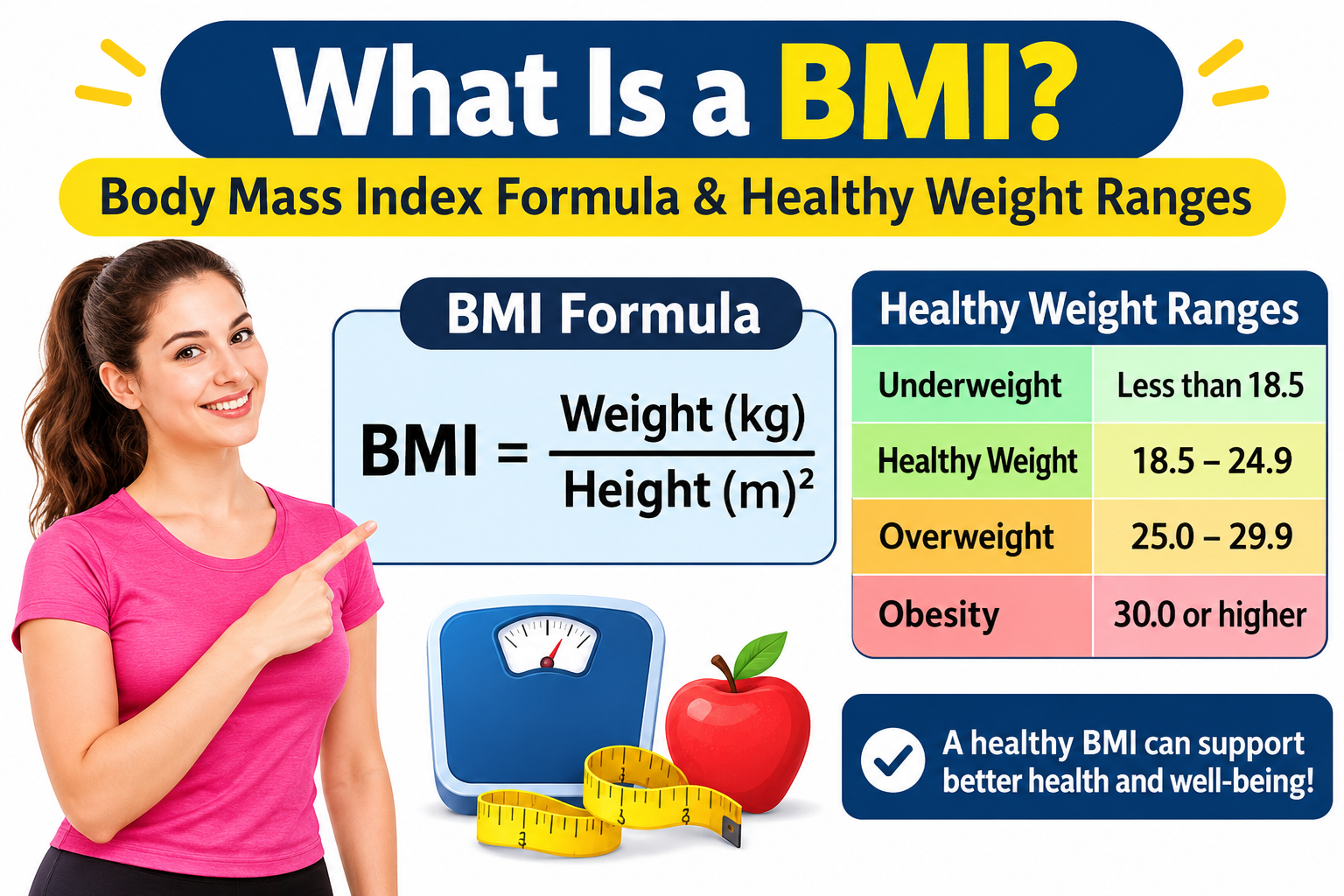
The standard BMI formula is:
BMI = Weight (kg) ÷ Height (m)²
For example, let’s say someone is 70 kg and 1.75 meters tall.
The calculation would be as follows:
- Weight: 70 kg
- Height: 1.75 m
- Height squared: 1.75 × 1.75 = 3.0625
- BMI: 70 ÷ 3.0625 = 22.86
The BMI for this person would be around 22.9, which is in the healthy weight category for adults.
You can also find your body mass index easily with an online BMI calculator. No need to calculate manually with the formula.
Why Is BMI Important for Your Health?
Understanding your BMI can help you be more aware of your body weight and potential health risks.
While BMI is not a complete picture of your health, it can provide valuable information that can help you make healthier lifestyle choices.
Here are some of the key reasons why BMI is important:
1. Helps You Monitor Your Body Weight
BMI is a simple tool to understand if your weight is in a commonly recommended range for your height. It can also help you track changes in your weight to detect weight gain or loss.
2. Identifies Potential Health Risks
A higher BMI can be associated with an increased risk for certain health conditions, such as type 2 diabetes, high blood pressure, heart disease, and sleep apnea.
3. Supports Healthy Lifestyle Choices
Knowing your BMI can help motivate you to focus on healthy eating, exercise, sleep, and other healthy habits.
4. Helps Healthcare Professionals
Doctors can use BMI, along with other measurements, medical history, and physical exams, to assess potential health risks related to weight.
What Are the Limitations of BMI?
While BMI is a useful screening tool, it does have some limitations.
For example, BMI does not take into account muscle mass, body fat, bone density, or water weight.
Athletes or people who engage in strength training regularly may have a higher BMI due to muscle mass. This doesn’t necessarily mean they have excess body fat.
Older adults may experience muscle loss, even if their BMI is in the healthy range.
BMI also doesn’t tell you where fat is stored on your body.
For example, abdominal fat can be associated with certain health risks.
This is why BMI should not be the only measure of health. Other factors, such as waist circumference, blood pressure, cholesterol, blood sugar, and overall lifestyle habits, can also provide valuable information.
How to Maintain a Healthy BMI?
Maintaining a healthy body weight is not about extreme diets or trying to reach a certain number on the scale. It’s about building sustainable habits that support your overall health and well-being.
Here are some practical lifestyle tips to keep in mind:
- Eat a Balanced Diet: Include plenty of vegetables, fruits, whole grains, lean proteins, and healthy fats in your meals.
- Exercise Regularly: Aim for regular physical activity, like walking, cycling, swimming, or strength training.
- Drink Enough Water: Staying hydrated is important for normal body functions and overall health.
- Get Enough Sleep: Adults should aim for at least seven hours of sleep per night.
- Monitor Your Weight: Keep an eye on your weight from time to time, but pay attention to long-
- Avoid Extreme Diets: Focus on realistic eating habits rather than following restrictive diets that may not be sustainable.
If you’re concerned about your weight or BMI, you should consult a qualified healthcare professional for personalized guidance.
Is BMI the Same for Men and Women?
The standard BMI calculation for adults is the same for men and women. The same formula is used and the same adult BMI categories generally apply.
However, there can be differences in body composition. Men and women may have different proportions of muscle and body fat, which is not reflected in BMI.
For children and teenagers, BMI is interpreted differently. Age and sex are taken into account when comparing BMI to growth charts, as body composition changes as they grow.
BMI is also different for pregnant individuals, as weight changes related to pregnancy can make standard BMI interpretation less appropriate.
Frequently Asked Questions (FAQs)
1. What is a normal BMI for adults?
For most adults, a normal or healthy BMI is between 18.5 and 24.9.
However, it’s important to consider BMI in conjunction with other health measurements.
2. How to calculate BMI at home?
To calculate your BMI, divide your weight in kilograms by your height in meters squared. You can also find your BMI quickly using an online BMI calculator.
3. Is a BMI of 25 considered overweight?
Yes, a BMI of 25 is considered overweight according to standard adult BMI categories.
4. Can BMI tell me how much body fat I have?
No, BMI is an estimate of your weight relative to your height, but it doesn’t directly measure your body fat percentage or differentiate between muscle and fat.
5. Is BMI an accurate measure of health?
While BMI is a useful screening tool, it’s not the sole determinant of overall health. Other factors, such as physical activity, body composition, medical history, and metabolic health, are also important.
Conclusion
Understanding what is a BMI is a good first step to help you be more aware of your weight and general health. Body Mass Index is a simple tool that uses height and weight to place adults into different weight categories.
While the BMI body mass index calculation can be helpful in identifying potential health concerns related to weight, it shouldn’t be used as the sole measure of physical health. Other factors, such as muscle mass, body fat distribution, age, and medical history, also play a role.
By being aware of your BMI and focusing on healthy eating, exercise, sleep, and consulting with professional healthcare advice, you can make more informed decisions to maintain a healthy lifestyle.