Hemoglobin A1C is a blood marker used to assess blood sugar health.
It is a percentage reflecting the average blood sugar level over the past 90 days.
Getting a blood test in a formal laboratory is the only way to accurately measure your A1C level, but you can estimate your value using your blood sugar level.
Keep reading to learn more about blood glucose testing and how to calculate A1C at home.
What is A1C?
Hemoglobin is a protein found in red blood cells that binds to oxygen. These cells live for about three months and deliver oxygen and essential nutrients to vital organs. During circulation through the body, red blood cells come into contact with sticky blood sugar molecules and become glycolated (coated with sugar).
Laboratories analyze the amount of sugar that sticks to hemoglobin, and healthcare providers use this data to assess blood sugar control.
Remember, the A1C level is one of several ways to measure blood sugar health, and it’s not a perfect test.
Having a low red blood cell count, anemia, or long-term alcohol consumption can cause your results to appear falsely high or low. The best way to ensure accurate results is to have your A1c level checked at a laboratory every three months.
What is the difference between A1C and blood sugar levels?
Unlike A1C, which is a long-term data point, blood glucose levels provide a snapshot of your blood sugar levels at the time of testing. A laboratory can measure fasting blood sugar levels (your blood sugar level without eating) or conduct random glucose tests at any time of the day.
Handheld devices, including glucometers that measure blood levels by drawing blood from a fingertip, or wearable implants called continuous glucose monitoring devices (CGMs), can measure your glucose levels. This data is available almost instantly and provides valuable information about how your body metabolizes foods and beverages.
Knowing how your body reacts to foods can help you develop a customized diet plan. You may be surprised to learn that some “high-sugar” foods, such as white rice or fruit, don’t affect your blood sugar levels as much as you thought.
The Importance of Monitoring A1C Levels
Your physician can use the A1C marker to evaluate your risk for prediabetes, diabetes, and gestational diabetes.
High levels of the A1C marker can be managed with changes in diet and lifestyle, such as adding more fiber foods and exercising.
Can you find out your A1C level at home?
Yes, you can do it with the help of data from your glucometer or CGM monitor; however, for this purpose, you will need at least three months of data.
Test kits for the A1C marker are available, but according to scientific evidence, they are not accurate.
A study conducted in 2022 evaluated the accuracy of three popular test kits in comparison with lab tests, and all of them failed to meet the standards of the National Glycohemoglobin Standardization Program.
The reason might be that the user incorrectly calculated their test result, but the fact is that the test kits can only provide an estimation of your blood values.
Conversion Methods for Calculating A1C
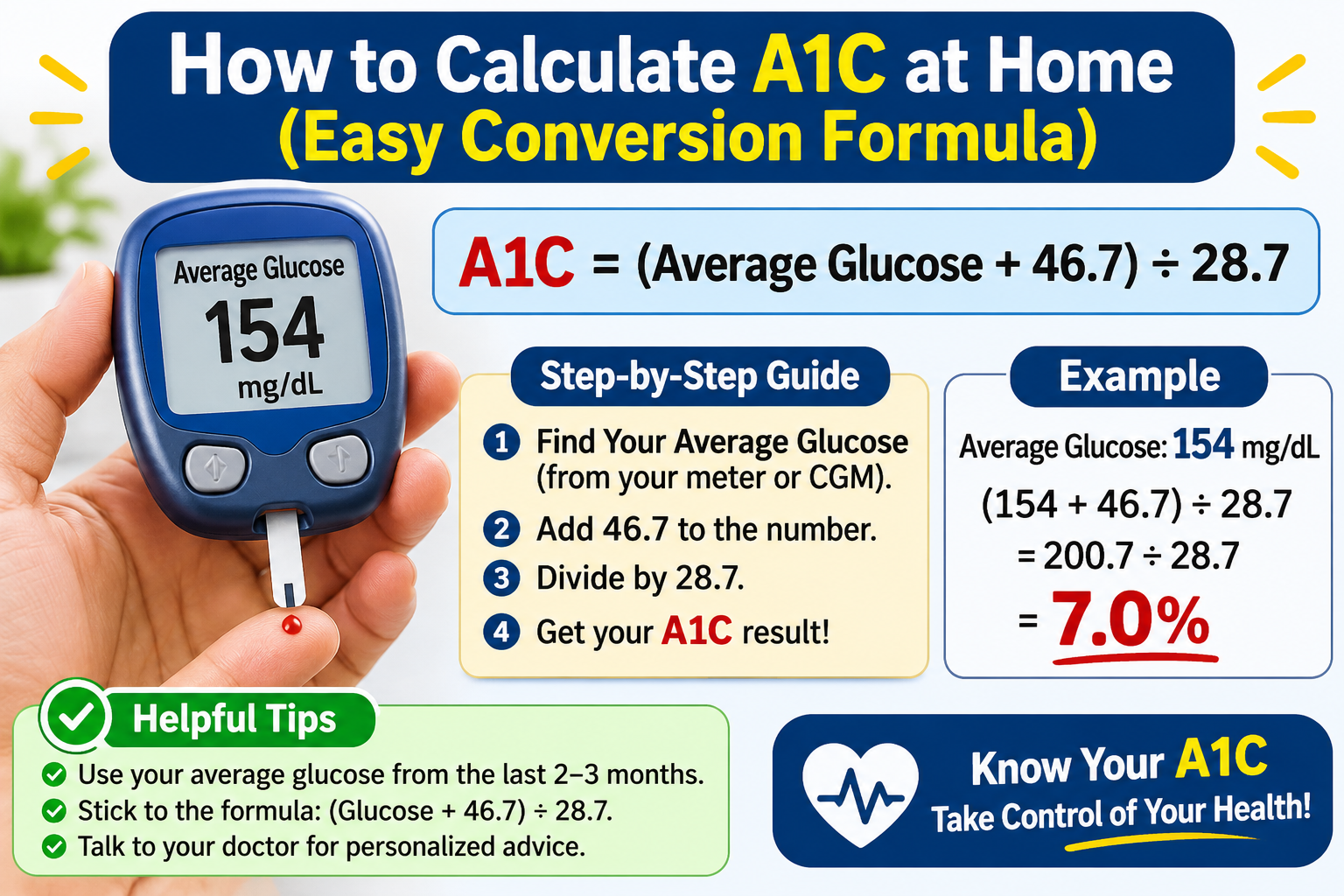
You can find your A1c value at home using a simple conversion formula.
Before you begin, convert any mmol/L units to mg/dL; you can follow the instructions in the table below to complete this step.
You’ll also need your estimated average glucose level, which your glucometer or CGM device can provide.
This information is calculated based on data collected over months from your self-administered tests. The final A1c calculation will provide an estimate of your level.
| Starting unit of measurement | Calculate A1c |
| For mg/dL | (46.7 + estimated average glucose) / 28.7 = your A1c |
| For mmol/L | 1) Convert mmol/L to mg/dL: Estimated average glucose (mmol/L) * 18.015 = estimated average glucose in mg/dL. 2) Use the converted value and repeat the calculation from the first row. |
Understanding Your Results
The American Diabetes Association has set the following cut-offs for A1c:
| Interpretation | A1c |
| Normal | <5.7% |
| Prediabetes | 5.7 to 6.4% |
| Diabetes | ≥ 6.5% |
A single high A1c test result, without other obvious symptoms, is not enough to diagnose diabetes.
If you have any concerns about your results, contact your medical team.
An important difference
A1c is measured differently from blood sugar levels and this might confuse you when analyzing the results.
For instance, blood sugar levels of 106 mg/dL (6 mmol/L) 2 hours after eating are normal, but an A1c value of 6% is high and could suggest prediabetes.
It is necessary to know the cut-offs for each test when analyzing the results.
If you have problems with analyzing your values, please ask your health care providers for assistance.
5 Tips on How to Maintain Healthy Blood Sugar Levels
Maintaining healthy blood sugar levels will reduce the risks of diseases, and provide energy.
Tips that will help maintain healthy levels are;
1.Increase your level of physical activity.
Sugar molecules fuel your muscles and important organs, and increased physical activities may lower blood sugar levels.
The Center for Disease Control recommends at least 150 minutes of aerobic exercises and two days of strength training per week.
Pick up an activity that you love, this may be dance or a new class, it is easy to be consistent when you are having fun.
2. Choose foods that support blood sugar.
Fiber-rich foods are good in maintaining healthy blood sugar levels.
This food includes whole grains, vegetables, fruits, legumes, nuts, and seeds.
For prediabetics, changing eating behaviors will be crucial in managing their conditions and prevent developing type 2 diabetes.
3. Have food at regular intervals
Consuming smaller meals during the day helps manage the hunger levels and blood sugar levels too.
If you skip your meals, the chances of binge eating become high, which in turn results in a rise in the blood sugar levels suddenly.
4. Give priority to water wherever possible
The sugary drinks go into your bloodstream very easily, and hence it is hard to maintain your blood sugar levels.
In order to improve your response towards the blood sugar levels, consume water or sparkling water as often as possible.
You could make it more flavorful without consuming sugar by using natural flavor boosters like mint leaves or cucumbers.
5. Stress management
Stress is one factor that causes metabolic disorders, and your blood sugar level regulation is one of them.
Caring for yourself is quite tough when you are stressed and exhausted.
Some evidence-based stress-relieving techniques include being active, yoga, meditation, and professional counseling.
Frequently Asked Questions (FAQs)
1. Is it possible to calculate my A1C at home without a blood test?
Yes, you are able to calculate your A1C at home through the average blood sugar levels that you get from the glucometer or continuous glucose monitor (CGM). You should have your regular blood sugar readings which should be taken for about three months. This is just an estimation and not the actual A1C test in the lab.
2. How do I calculate my A1C from my average blood sugar?
You can use the formula below to estimate your A1C.
A1C (%) = (46.7 + estimated average glucose) ÷ 28.7
Before using the above formula, make sure that your average blood sugar is in mg/dL.
3. How long does it take to have blood sugar results to compute for A1C?
The results within three months are deemed the best in computing for A1C. The A1C result shows the mean amount of sugar level in the last two or three months, but those closer to the present day carry more weight.
4. What is the normal A1C range for adults?
According to the standard guidelines of the American Diabetes Association (ADA):
Less than 5.7%: Normal A1C range.
5.7% to 6.4%: Prediabetes (high risk of developing diabetes).
6.5% or above: Diabetes range.
It is vital to consult a physician and go through the laboratory tests for diabetes confirmation.
5. Is the use of the A1C calculator at home an absolute requirement of conducting a laboratory test?
No. The use of an A1C calculator at home only gives you an estimated result depending on the average of your blood sugar levels. Some variables may not be considered when determining the exact results of the A1C result.
In order to get accurate results, it is suggested that you conduct an A1C test at a certified laboratory.
Conclusion
If you know how to calculate your A1C at home, it will be easier for you to know more about your average level of blood glucose and its changes. You can estimate your A1C by calculating the results of measuring your glucose with a glucometer or a continuous glucose monitor (CGM) according to the A1C calculation formula.
But do not forget that the estimated result cannot replace the actual test. There are some conditions that may impact the accuracy of your A1C result – anemia and other blood disorders.
It will be best for you to consult your doctor, and if necessary, have an A1C test performed at a laboratory for more accurate results and the correct diagnosis.
Besides, blood glucose monitoring, proper nutrition, exercises, and a healthy way of life will keep your blood sugar in control.